Showing posts with label US Supreme Court. Show all posts

Friday, July 12, 2013

Morality = Bigotry?


George Whitefield preaching
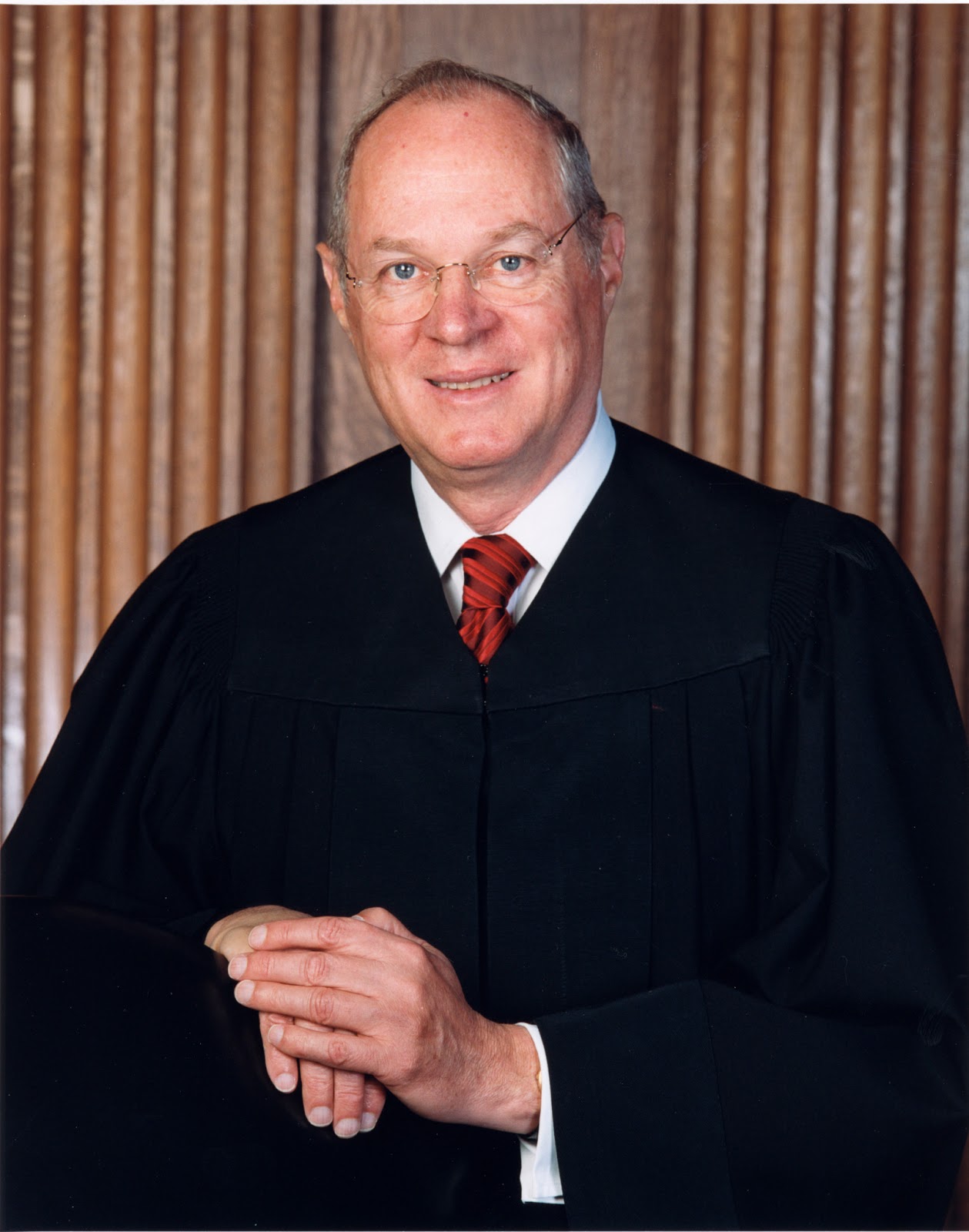
  In our last blog post we noted that Supreme Court Justice Anthony Kennedy virtually equated morality with bigotry. He pointed out that the House of Representatives, in passing the Defense of Marriage Act (DOMA), stated that the intent of the legislation was to uphold Judeo-Christian morality. Justice Kennedy then went on to insinuate that this amounts to a purpose to "degrade," "demean," and "disparage" homosexual couples who wish to get married.

    Does this mean that Judeo-Christian morality is tantamount to bigotry? Let us be perfectly blunt and candid about this. The whole aim and purpose of morality is to stigmatize certain forms of behavior. What Justice Kennedy appears to be objecting to is the very idea of morality itself – the idea that certain forms of behavior, by their very nature, are wrong. But most laws have the same practical effect that Justice Kennedy found so obnoxious in DOMA. They criminalize certain forms of behavior. Those who engage in those forms of behavior are subjected to certain incapacities. Is this unfair discrimination? Not hardly. The whole purpose of the law, of any law, is to proscribe certain forms of activity. DOMA was no different.
    But passing beyond a court ruling on a piece of legislation, why do Judaism and Christianity consider homosexual activity immoral in the first place? What is so bad about being gay?
    Homosexuality is immoral because it runs counter to the creative purpose of God. Implicit in any monotheistic religion is the idea that all of reality was created by a single, intelligent Being. That being the case, everything in life has meaning and purpose. And so, when we ask the question, what is the primary purpose of sex, the obvious answer is heterosexual reproduction. This is why the great Abrahamic religions – Judaism, Christianity, and Islam – have always looked on homosexuality as a perversion of something that God created for other purposes. The norm is that a man and a woman should enter into a permanent, intimate relationship with each other, and that that, in turn, would provide the basis for a stable family life. Anything else beside that and perpetual chastity is forbidden.
    But, it will be objected, gays are born that way and cannot help being the way they are. They should not be stigmatized for something over which they have no control.
    We would acknowledge that in some individuals same-sex attraction is very real, and not something over which they feel they have any control. Nevertheless, certain things must be borne in mind.
     First of all, there is no solid evidence that homosexuality is hereditary. No one has been able to identify a "gay gene." A homosexual male is still biologically a normal male, and is capable of fathering children the usual way. Instead, homosexuality is manifestly an emotional or psychological condition, what used to be known as "Gender Identity Disorder," and most likely it is the result of a problem in early childhood socialization.
    But beyond that, homosexuality is really no different from any other kind of sin, and should be treated no differently. Do homosexuals feel a predisposition to their particular form of activity? We all feel predisposition to some form of sin. We are all born liars and thieves. As one older woman of our acquaintance put it, "I have been a mother and a grandmother, and I never once had to teach a child how to steal cookies." Anti-social behavior comes naturally to us, and it is only with great difficulty that it can be driven from us. Nevertheless, we are still morally accountable for our own conduct. We can tell the difference between good and evil, right and wrong, and can make a conscious choice to do what is good and right. The mere fact that we have a natural predisposition to do what is wrong does not excuse us. We are rightly condemned for our bad behavior.
    Therefore we should not single our homosexuals and treat them as social lepers. The fact of the matter is that the Word of God stands above us all and condemns all of our sin – that of the selfish, greedy executive in his corner office suite as well as that of the sexual libertine in the gay bathhouse. We are all sinners by nature, and we all need redemption.
    No one likes to be told that he is a hell-bound sinner, and it is only natural that some will react negatively, sometimes even violently. We would rather shoot the messenger than heed the message.
    And so that is the position in which the church finds itself today. We have a message that is decidedly unpopular. And yet it is our duty to tell people what they need to hear, not what they want to hear. We do no one a favor by hiding or disguising the truth.
    
Related blog posts:
The Case for Moral Absolutes 
What Is Morality? 
What God Requires 
What God Thinks About Modern Western Society 

And on the subject of Judeo-Christian morality see:
Jesus and the Torah 

Monday, July 8, 2013

A Postscript on the DOMA Decision


As we noted earlier ("Redeeming the Culture") the U.S. Supreme Court recently handed down its decisions on a pair of same-sex marriage cases. In one of them, United States v. Windsor, the Court struck down provisions in the federal Defense of Marriage Act (DOMA) that defined marriage, for purposes of federal benefits, as a union between one man and one woman. Under the Court's ruling the federal government will now be obliged to recognized same-sex marriages that were solemnized in states where such unions are legal.
    When one reads the fine print of the Court's opinion a chilling specter arises. Justice Kennedy, writing for
Justice Anthony M. Kennedy
the majority, reviewed the legislative history of the statute, and noted in particular that the House of Representatives, in passing the bill, had declared that the legislation expresses "both moral disapproval of homosexuality, and a moral conviction that heterosexuality better comports with traditional (especially Judeo-Christian) morality" (H.R. Rep. No. 104-664, p.16). Justice Kennedy cited this as "evidence of a law having the purpose and effect of disapproval of that class [i.e. gay couples]. The avowed purpose and practical effect of the law here in question are to impose a disadvantage, a separate status, and so a stigma upon all who enter into same-sex marriages" (opinion, pp. 20-21). He went on to say that "the principal purpose and the necessary effect of the law are to demean those persons who are in a lawful same-sex marriage." He declared that the Fifth Amendment to the U.S. Constitution "withdraws from Government the power to degrade or demean in this way this law does . . ." (ibid., p. 25. What Justice Kennedy is evidently referring to here is a legal concept known as "substantive due process"). Justice Kennedy concluded by saying: "DOMA instructs all federal officials, and indeed all persons with whom same-sex couples interact, including their own children, that their marriage is less worthy than the marriage of others. The federal statute is invalid, for no legitimate purpose overcomes the purpose and effect to disparage and injure those whom the State, by its marriage laws, sought to protect in personhood and dignity" (pp. 25-26).

    What Justice Kennedy has done, in effect, is to equate "traditional (especially Judeo-Christian) morality" with a purpose to "degrade," "demean," and "disparage" one class of citizens, and to treat their marriages as "less worthy" than others. Morality, in other words, is tantamount to bigotry.
    Justices Scalia and Alito both delivered scathing dissents. Justice Scalia, in particular, noted a disturbing implication of the Court's decision. Even though Justice Kennedy had concluded his opinion by saying "This opinion and its holding are confined to those lawful marriages," i.e., those that have been declared legal by the states in which they were made, Justice Scalia observed "How easy it is, indeed how inevitable, to reach the same conclusion with regard to state laws denying same-sex couples marital status" (dissenting opinion, p. 23). In other words, it is only a matter of time before gay couples will sue the states where same-sex marriage is still illegal, and the federal courts will find those laws unconstitutional using the same legal reasoning as Justice Kennedy did in his opinion.
    Justice Alito, in his dissenting opinion, noted that "The long-term consequences of this change are not now known and are unlikely to be ascertainable for some time to come" (dissenting opinion, p.8). In a footnote he added, "As sociologists have documented, it sometimes takes decades to document the effects of social changes – like the sharp rise in divorce rates following the advent of no-fault divorce – on children and society" (Ibid.). And he concludes by saying, "At present, no one – including social scientists, philosophers, and historians – can predict with any certainty what the long-term ramifications of widespread acceptance of same-sex marriage will be" (p. 9).
    And yet accepted is what same-sex marriage is rapidly becoming. For better or for worse, the U.S. Supreme Court has taken the fateful plunge, and it is probably too late to turn around now. Supreme Court decisions are notoriously difficult to reverse.
    It is perhaps only a matter of time before those churches who wish to remain faithful to Christian standards of morality will find themselves branded as bigoted hate groups. The Court's decision does not augur well for the continued freedom of religion in this country.


Other blog posts on related topics:
The Queer Scouts of America?
The Real Issue in the Gay Marriage Debate
Same Sex Marriage:What Is at Stake

Monday, April 1, 2013

The Real Issue in the Gay Marriage Debate


    Last week the U.S. Supreme Court heard arguments in two cases involving same-sex marriage. The first case centered on California's "Proposition 8," which overturned, by popular referendum, the state's law allowing same sex couples to wed. The second case involves the federal Defense of Marriage Act (DOMA), which defines marriage, for federal purposes, as a union between one man and one woman, thereby denying federal spousal benefits to homosexual couples who were legally married in states that permit such unions. Rulings in the two cases are expected in June.
    Recent polls show that public opinion is shifting in the direction of acceptance of gay marriage. One option at the court's disposal would be to treat the matter as a states' rights issue, and let the political process take is course in the individual states. If the court pursues this course, it is possible that in the next two years seven more states may legalize same sex marriage, in addition to the nine states and the District of Columbia which have already done so.
    But why the change in public opinion? Why were people opposed to gay marriage before? Why was it illegal in the first place?
    During the argument over DOMA, Justice Elena Kagan noted that the report of the House of Representatives attached to the statute cited "moral disapproval" of homosexuality, and she called that "a pretty good red flag" for discrimination. Press reports indicated that her comment caused a stir in the courtroom.
    This, however, begs the question. All morality entails discrimination: discrimination between good and evil, between virtue and vice. The court itself discriminates every time it decides a case, ruling in favor of one party against another.
    Moreover, if morality itself involves discrimination that is impermissible under the Constitution, is morality itself unconstitutional? Is America legally constrained to be an amoral society?
    It should not have surprised Justice Kagan that the House of Representatives, in passing a bill dealing with a subject like homosexuality, would cite moral considerations. Homosexuality was roundly condemned by both Judaism and Christianity.
    The traditional belief is was that sex was designed to fulfill a specific purpose, viz., heterosexual reproduction. To that end there is a natural attraction between members of the opposite sex, and in order to promote social stability sexual activity was supposed to be confined to marriage. Homosexuality was regarded as a grotesque anomaly, the very antithesis of what marriage was supposed to be.
    It was also regarded at one time as a mental disorder. A pivotal turning point in the way society views homosexuality came in 1975 when the American Psychiatric Association decided to remove the condition from its Diagnostics and Statistics Manual. The APA arrived at its conclusion, however, not because of any new clinical findings, but because of political pressure: a group of young activists campaigned for it. The rationale for the new policy is that since many homosexuals do not feel any subjective distress over their sexual orientation, it should not be considered a pathology. But under this standard almost any form of compulsive, antisocial, and even criminal activity could be considered "normal." If the alcoholic is not willing to admit that he has a drinking problem, is he mentally ill? What if he's perfectly happy being drunk, and thinks that he can control his drinking? Is the benchmark of mental health simply feeling good about one's self?
    The anomaly presented by homosexuality should be readily apparent. If one is biologically male, and yet is sexually attracted to other males, there is something obviously dysfunctional there, a disconnect between a person's psychology and biology. It is absurd to call such a condition "normal."
    The argument is often made that gays are born that way and therefore cannot help being the way they are. Yet numerous studies have been done to find a biological or genetic cause for homosexuality, yet none have produced conclusive results. What has been demonstrated, however, is that a common pattern among male homosexuals is a close binding mother and a distant father, suggesting that homosexuality is a learned behavior acquired during early childhood socialization.
    The gay lifestyle, at least among male homosexuals, is highly eroticized and notoriously promiscuous, whereas marriage is about restricting sex to one partner. How many gays who want to get "married" are willing to practice strict monogamy within an exclusive relationship?
    The overriding interest of the state in marriage is to encourage stable family units, and this calls for
Van Gogh: Mother and Child
responsible, committed heterosexual relationships. Children need to be connected, wherever possible, to their natural, biological parents. Marriage is meant to recognize these realities.

    The push to legalize same-sex marriage threatens to redefine marriage in a radical way. The effect will not be felt immediately. Gays will be able at first to claim that they have not undermined anyone else's marriage. But what kind of expectation will be created for future generations? That anything goes? That any pairing of sexual partners is permissible? That a permanent, committed relationship between a child's biological parents is unrealistic?
    As we have said before, gay marriage is not the beginning of the end. It is the end of the end, the end of a long process of moral and social disintegration that began with feminism and the sexual revolution of the 70's. Today the wreckage lies all around us – a whole generation of young people raised in unstable, single-parent families. Of course they support gay marriage by large majorities: traditional family life is foreign to them. The question is, will the Supreme Court deliver the final blow?

Related blog posts:
Should Same Sex Marriage Be Made Legal? 
Same Sex Marriage: What Is at Stake 
The Future of Playboy America 

Saturday, December 8, 2012

SAME SEX MARRIAGE: WHAT IS AT STAKE


    Yesterday (Friday, Dec. 7) the U.S. Supreme Court announced that it will take up two cases involving same sex marriage. At issue in one case is Proposition 8, a California law passed by popular referendum that bars homosexual marriages. The other case involves the federal Defense of Marriage Act, which defines marriage for federal benefit purposes as a union between a man and a woman. The justices are expected to hear oral arguments some time in March and issue their opinion by late June.
    Should homosexual couples be allowed to marry? We might begin by asking what interest the state has in the question at all. The answer, it would seem, is that the state has a compelling interest in establishing stable home environments in which to raise children. It will be noted in this connection that it is the behavior of heterosexuals, that homosexuals, that is the real concern here, for it is heterosexual couples that are most likely to have children.
    How then does homosexual marriage affect the behavior of heterosexuals? The essential problem involves the value system of society and how we define what is "normal" and accepted behavior. Traditionally society has defined the norm as a nuclear family built on a monogamous, heterosexual marriage. "Family life" required a certain kind of behavior from each spouse, and any kind of infidelity was frowned upon. The object, from society's standpoint, was to create a cohesive family unit in which the physical and emotional needs of children could be met.
    But if homosexuals are permitted to marry, then what becomes the norm? What, exactly, is the purpose of marriage? What is the rational basis for the legal institution? Why not legalize polygamy or prostitution? Is society prepared to endorse any kind of living arrangement?
    The problem can be illustrated by what happened in one of the mainline Protestant denominations, the Presbyterian Church (USA). Prior to 2011 the PCUSA's constitution contained what was known as "the fidelity and chastity clause," which read as follows: "Those who are called to office in the church are to lead a life in obedience to Scripture and in conformity to the historic standards of the church. Among those standards is the requirement to live in either fidelity within a covenant marriage between a man and a woman, or chastity in singleness." It was clear and explicit as to exactly what was required in the area of sexual conduct.
    But in 2011 the General Assembly (the church's highest governing body) voted to permit the ordination of practicing homosexuals.. This required amending the section mentioned above. It now reads: ". . . standards for ordained service reflect the church's desire to submit joyfully to the Lordship of Jesus Christ in all aspects of life . . . Governing bodies shall by guided by Scripture and the confessions in applying standards to individual candidates." But it is left to individual presbyteries to decide what it means to "submit joyfully to the Lordship of Jesus Christ" in sexual matters. In the end it all comes down to a matter of personal opinion. For all practical purposes the PCUSA no longer has a definable standard.
    What is worse is that it makes the moral pronouncements of the church on almost any subject suspect – whether social justice, international peace, or environmental responsibility. The church can no longer say with any degree of certainty what is moral behavior in any area of life. And if the Presbyterian Church, long noted for its theological acumen, cannot say, where does that leave the rest of society?
    The absence of clearly defined sexual norms, in turn, leads inevitably to the breakdown of the family. Adultery, divorce and fornication all have the effect of destabilizing the family and creating the pattern we now have of single parent households headed by women with a variety of male partners who come and go, and none of which are involved in the lives of their biological offspring. The effects on the children are devastating. An increase in the number of single parent households can be correlated with an attendant rise in crime and poverty.
    The loss of moral bearings has implications for the rest of the culture as well. In his Farewell Address George Washington observed that "of all the dispositions and habits which lead to political prosperity, religion and morality are indispensible supports." He went on to ask a pointed question: "Where is the security for property, for reputation, for life, if the sense of religious obligation desert the oaths which are the instruments of investigation in courts of justice"? When we cut loose the bonds of moral restraint no one's rights are safe, because there is no recognizable moral obligation to respect them. Law becomes a function of power, not morality. Might makes right. And once both God and family are removed as controlling influences in society, the state of necessity fills the void.
    A Supreme Court decision adverse to traditional morality seems likely, but this is a development that did not happen in a moment. It is the result of decades of erosion of traditional values. We have become, for all practical purposes, an amoral society. No doubt one day near the end of June we will wake up and realize that we now live in a post-Christian culture. But the challenge will be, can we function without a cohesive family structure?

You may also want to see:
Should Same Sex Marriage Be Made Legal 
The Future of Playboy America